Cost accounting: full cost, variable cost and decisions
Direct and indirect costs, cost centres, full costing and direct costing, activity-based costing, the relevance of differential costs only proved with an example, make or buy.
Financial accounting says how much the company earns as a whole; it does not say how much each product costs, which department is efficient, which customer is profitable. Cost accounting (management accounting) does, and it is used to set prices, control costs and make decisions. In this lesson we look at direct and indirect costs, allocation through cost centres, full costing and variable costing, activity-based costing, and the proof that for short-term decisions only differential costs matter, with an example in which full costing leads to a wrong choice.
Direct and indirect costs
A cost is direct with respect to an object (a product, a job) if it can be measured objectively and attributed to that object alone: the components mounted on a board, a technician’s hours booked to the job. It is indirect if it is common to several objects: the factory rent, the department head’s salary, the depreciation of a machine working for all products, the purchasing office. Indirect costs must be allocated with a criterion, and every criterion is partly arbitrary.
Cost centres
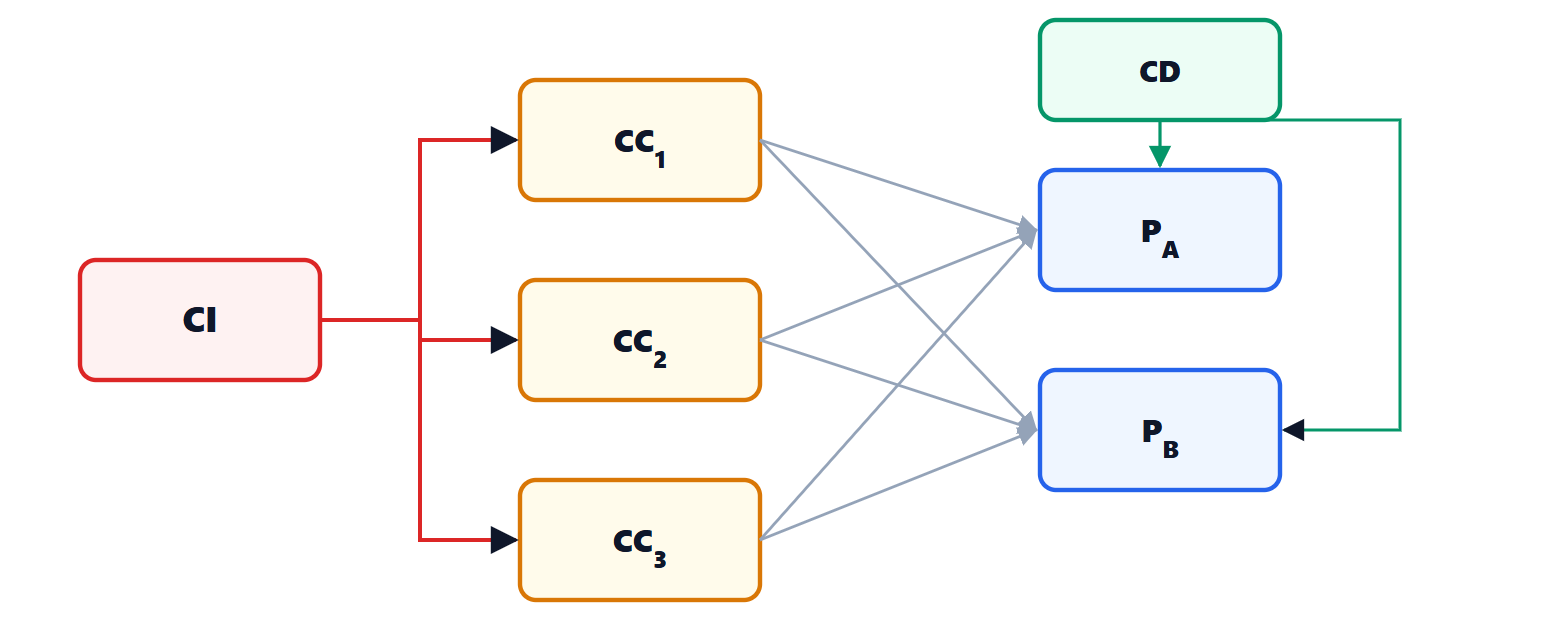
The classic method collects indirect costs in cost centres (an assembly department, testing, maintenance), reallocates service centres to production centres, and then attributes the cost of each centre to the products with an allocation base: machine hours, labour hours, square metres, number of batches.
Full cost and variable cost
- The full cost of a product includes direct costs and a share of all indirect costs, fixed ones too. It is used for long-term prices, which must cover everything, and for valuing inventory in the financial statements.
- Variable costing (direct costing) considers only the costs that vary with volume, and measures each product’s contribution margin (lesson on costs); fixed costs remain a common block, covered by the margins as a whole.
Activity-based costing
When indirect costs are large and products very different, allocating them on labour hours alone distorts: a product made in small batches, with many changeovers, orders and tests, consumes more indirect resources than one made in large batches with the same hours. ABC (activity-based costing) allocates costs to activities (setting up the machine, handling an order, testing) and then to products according to the number of times each requires them (the “cost drivers”). It often finds that niche products cost much more than was thought.
Decisions: differential costs are what count
Theorem. In a short-term decision that does not change fixed costs, the effect on the result of dropping a product  is
 , regardless of the share of fixed costs allocated to it.
Proof. The operating result is  , where the sum is over the products. Dropping removes its term from the sum, while
 stays the same, because fixed costs do not change in the short term. The difference is ‘s contribution margin with its sign changed; the way was allocated among the products does not appear. ∎
Example. Product B sells at 10, has variable costs of 6 and is allocated fixed costs of 5 per unit: full cost 11, a “loss” of 1 per unit. Dropping it seems obvious, but fixed costs do not disappear: with 10,000 units the company loses  of margin and the 50,000 of fixed costs allocated to B move onto the other products, which in turn may appear loss-making. This is the “death spiral” of full costing used for short-term decisions.
The same logic applies to make or buy (compare the purchase price with only the costs that would be avoided by not producing), to accepting a special order at a reduced price (worthwhile if the price exceeds the variable cost and there is spare capacity, without undermining normal prices), and to choosing which product to push when a resource is scarce: rank by contribution margin per unit of the scarce resource (for example per hour of the bottleneck machine), not by unit margin.
In the long run, on the other hand, all costs become variable: a product that never covers its share of fixed costs must be rethought, and full cost becomes the right measure again.