Limits in depth: the number e, the hierarchy of infinities, little-o and the tables to remember
Existence of the number e proved, from sequences to functions, hierarchy of infinities, little-o rules and substitution of infinitesimals, tables of standard limits, equivalences, Taylor expansions and indeterminate forms.
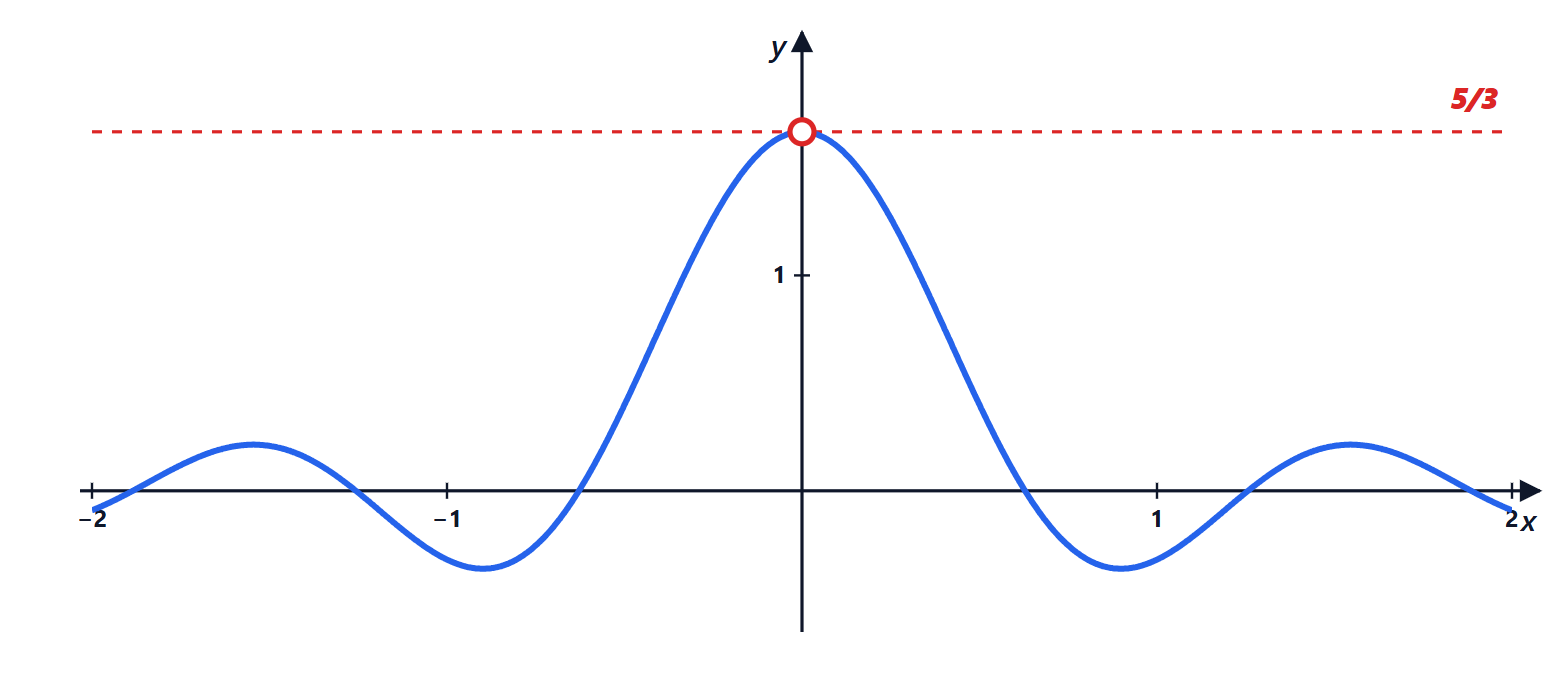
This page goes deeper into the lessons on limits and standard limits. It proves step by step the results that are usually used without proof: the existence of the number  , the passage from sequences to functions, the hierarchy of infinities, the rules of little-o notation and the principle of substituting infinitesimals. At the end are the tables to remember: standard limits, equivalences, the most used Taylor expansions, indeterminate forms with the right technique for each. The geometric proof of
 is in a separate in-depth page, linked from the lesson.
The number e exists
Theorem. The sequence  is increasing and bounded,
 ; so it has a limit, called , with
 .
Proof. By the binomial formula:

Increasing. Going from  to
 , each factor
 becomes
 , which is larger; so each term of the sum increases. In addition a positive term is added (the one with
 ). Hence
 .
Bounded. Every product of factors less than 1 is less than 1, so  . For
 ,
 , so

An increasing sequence bounded above has a limit (monotone sequence theorem, lesson on sequences). Since  and the sequence increases, the limit is greater than 2. ∎
The value is  ; the same proof also shows that
 , a series that converges very fast.
From sequences to functions
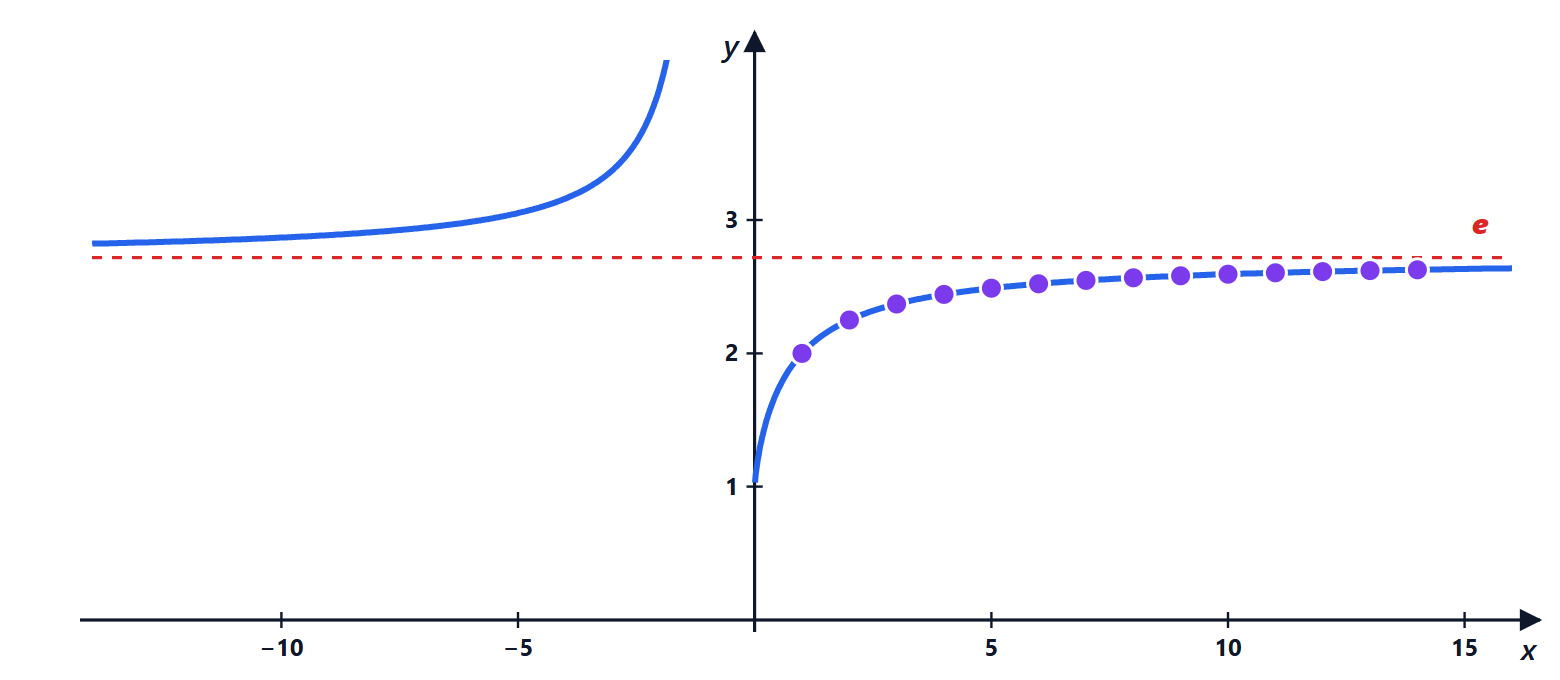
Theorem. 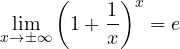 and
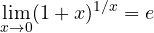 .
Proof. *Towards  .* For
 let
 be the integer part, so
 . Then
 , and since base and exponent both increase:

On the left there is  ; on the right
 . By the squeeze theorem the middle term also tends to .
*Towards  .* Set
 , with
 :

*Towards 0.* With  : if
 , ; if
 ,
 . In both cases
 . ∎
From here follow, as the lesson shows,  ,
 ,
 and
 . A useful corollary:
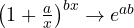 , obtained by setting
 .
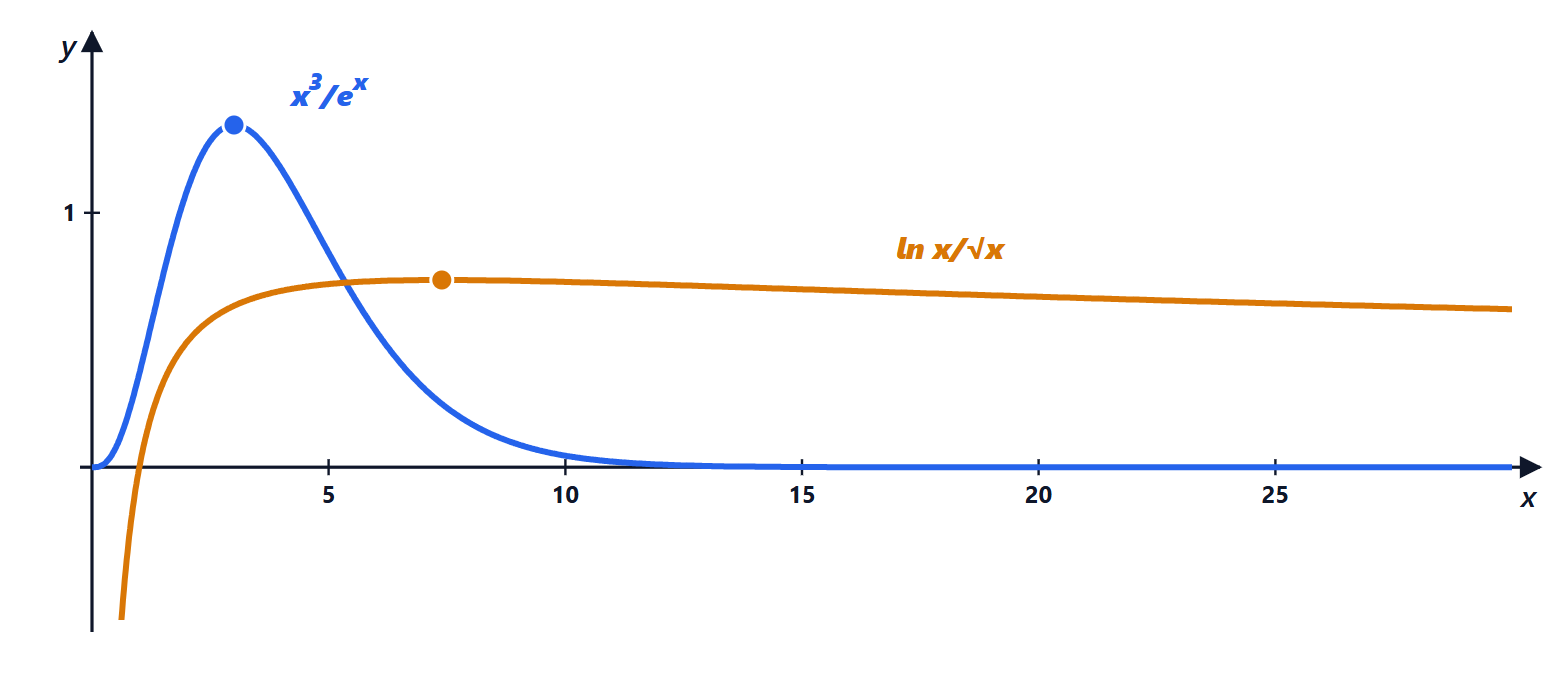
The hierarchy of infinities, proved
Theorem. For every  and
 :

Proof. *(i)* First the case  . For , since
 for
 :

so  . For any
 write
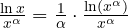 and set
 : it is
 .
*(ii)* Set  , i.e.
 :
 , which tends to 0 by (i) with exponent
 .
*(iii)* Let  be an integer greater than
 . For
 , every factor
 with
 is less than
 :

∎
The first one is what is used for  as (set ), and hence for
 .
Little-o notation and the substitution principle
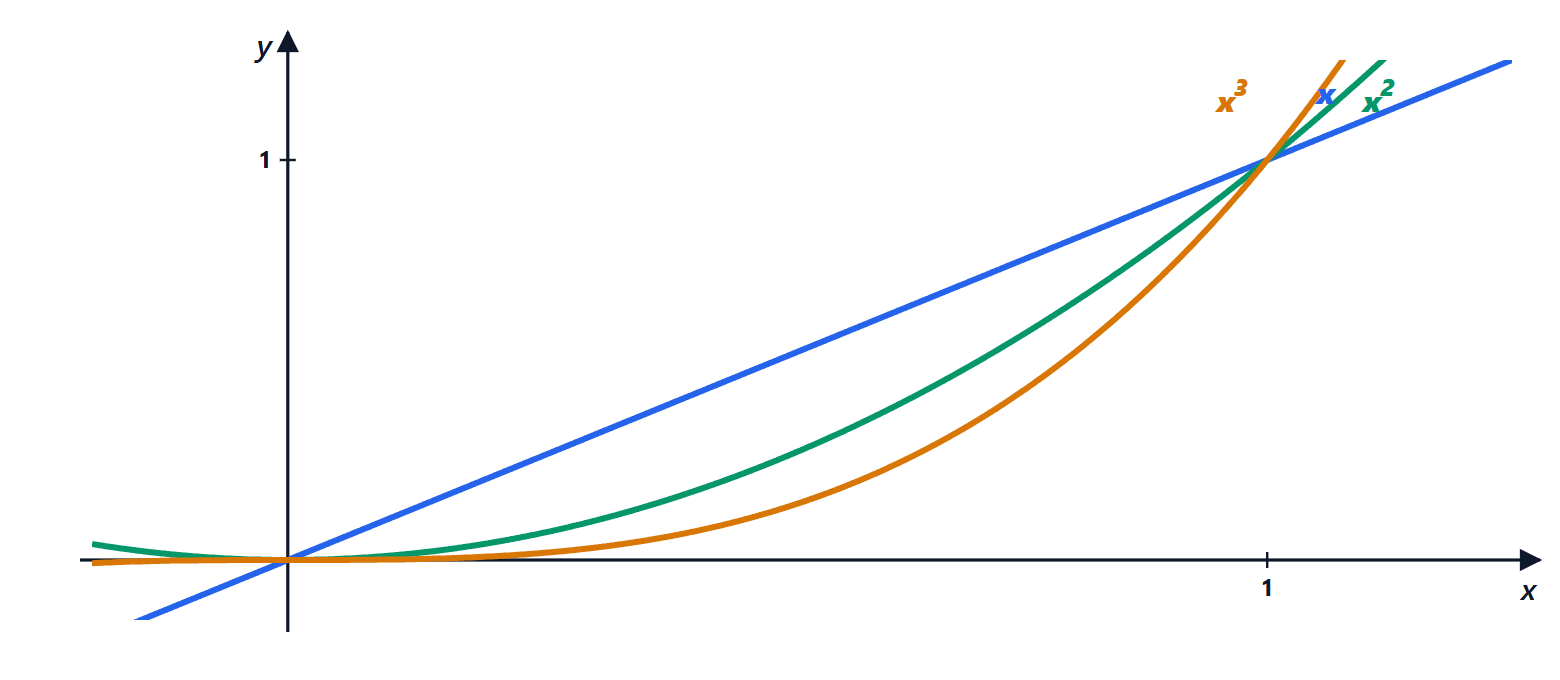
Definition. As  one writes
 (“f is little-o of g”) if
 :
 is negligible compared with
 . For example
 as
 , but
 as
 . The link with equivalences:
 if and only if
 .
Calculation rules (as , with  positive), all immediate consequences of the definition:
 : the difference of two little-o terms is not zero;
 for every constant
 ;
 and
 ;
 for
 ;
- if
 ,
 and
 : in a sum the lowest power “wins”.
Theorem (substitution of infinitesimals). If  and
 , then
 , in the sense that one of the two limits exists if and only if the other does, and they are equal. The same holds for products.
Proof.  , and the first and last factors tend to 1. ∎
In sums, on the other hand, substitution is allowed only if the leading terms do not cancel:  if
 is not “smaller” than the individual terms. When they cancel, as in
 , the next-order terms must be kept, that is, Taylor expansions must be used with the remainder
 written explicitly. This rule avoids 90 % of the mistakes in written exams.
Tables to remember
Standard limits as and equivalences
| Limit | Value | Equivalence as |
|---|---|---|
 ,  ,  ,  | 1 |  |
 |  |  |
 | 1 |  |
 |  |  |
 | 1 |  |
 |  |  |
 | |  |
 | 1 |  |
 | |  |
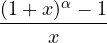
 | |  if  |
Each row also holds with  replaced by a function
 : for example
 and
 .
At infinity (, ,  real)
| Limit | Value |
|---|---|
 as  |  |
 ,  ,  ,  | 0 |
 and  as | 0 and 1 |
 ,  as  | 1 |
 | |
| as | 0 |
Order of growth, from slowest to fastest:  (the symbol
 means “negligible compared with”).
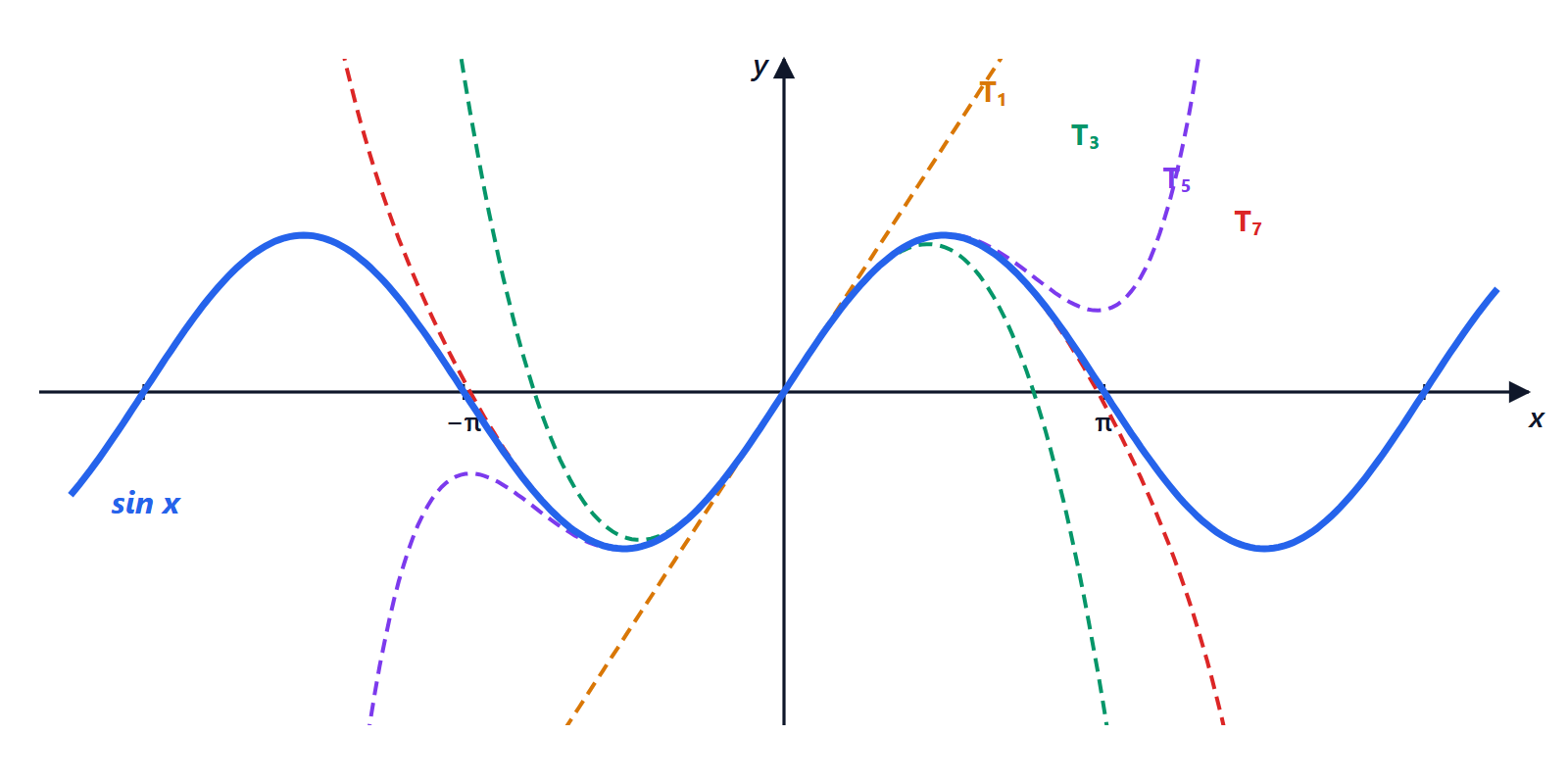
Maclaurin expansions most used in limit exercises
| Function | Expansion as |
|---|---|
 |  |
 | 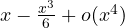 |
 |  |
 | 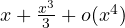 |
 |  |
 |  |
 |  |
 |  |
 | 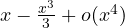 |
 |  |
Indeterminate forms and technique
| Form | Typical example | Technique |
|---|---|---|
 |  | equivalences; if terms cancel, Taylor |
 |  | factor out the dominant power or infinity |
 |  | rationalise or factor out |
 |  | rewrite as a quotient, hierarchy of infinities |
 |  |  and |
 ,  | ,  | , then the limit of the exponent |
The forms  are not indeterminate: they give
 , and the sign of the denominator matters (right and left limits). Neither are
 and
 : they are 0 and
 .
Exercises on all these techniques, from basic to exam level, are on the exercise page linked at the top.