Solved curve-sketching exercises, with graphs
Twelve complete function studies with graphs: polynomials, rational functions, exponentials, logarithms, roots, absolute values, cusps, oblique asymptotes and number of solutions of an equation with a parameter.
Curve-sketching exercises (studying the graph of a function) of the kind set in Calculus 1 (Mathematical Analysis 1) courses, in three levels: basic, with polynomials, rational functions and the exponential; intermediate, with logarithms, roots and absolute values; exam, with oblique asymptotes, cusps, split domains and discussion of the number of solutions of an equation, as in written exams. For each function the result summarises the key points; the complete solution, step by step and with the graph, opens with a click. The proofs of the criteria used are in the in-depth study linked at the top.
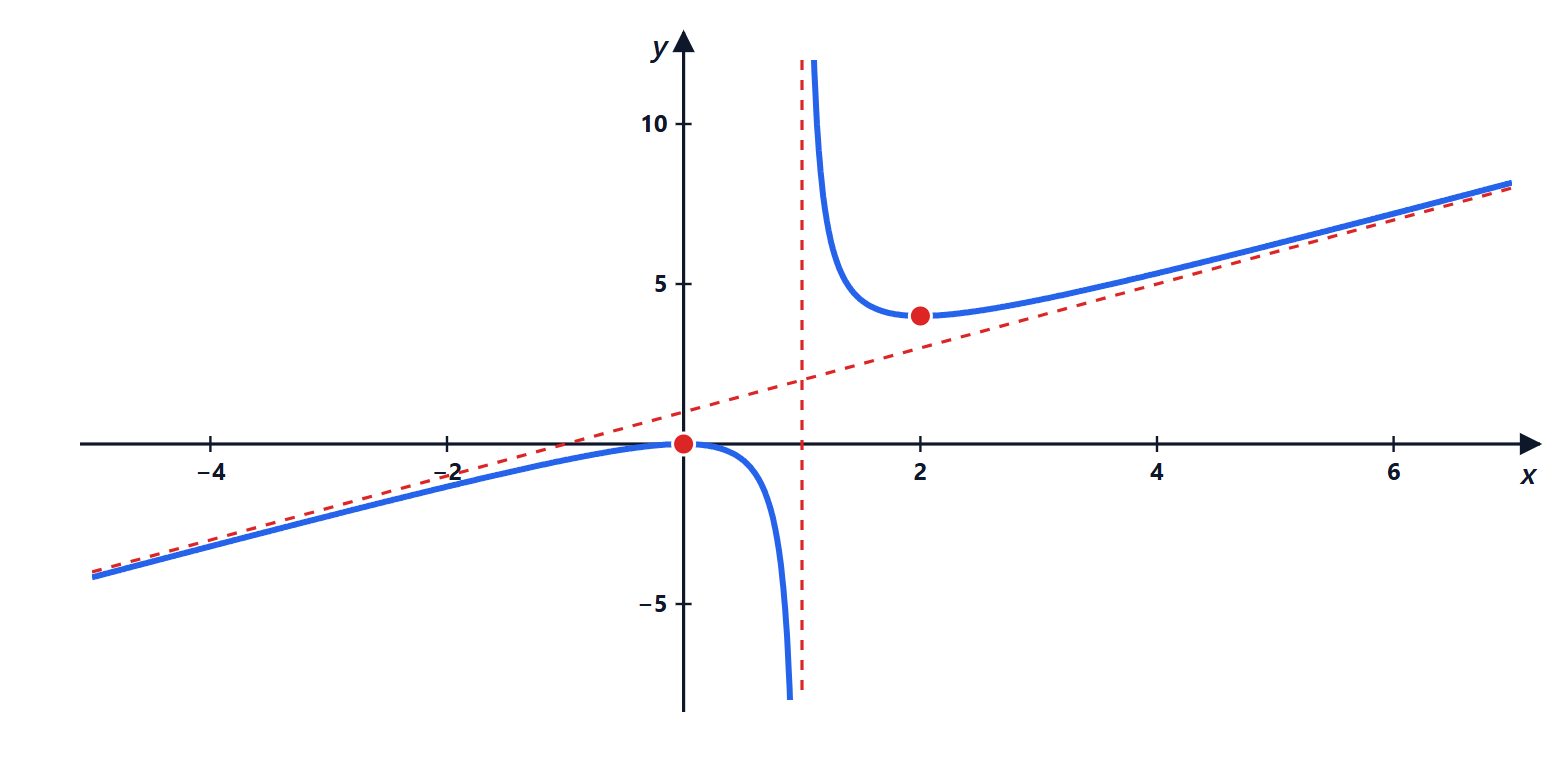
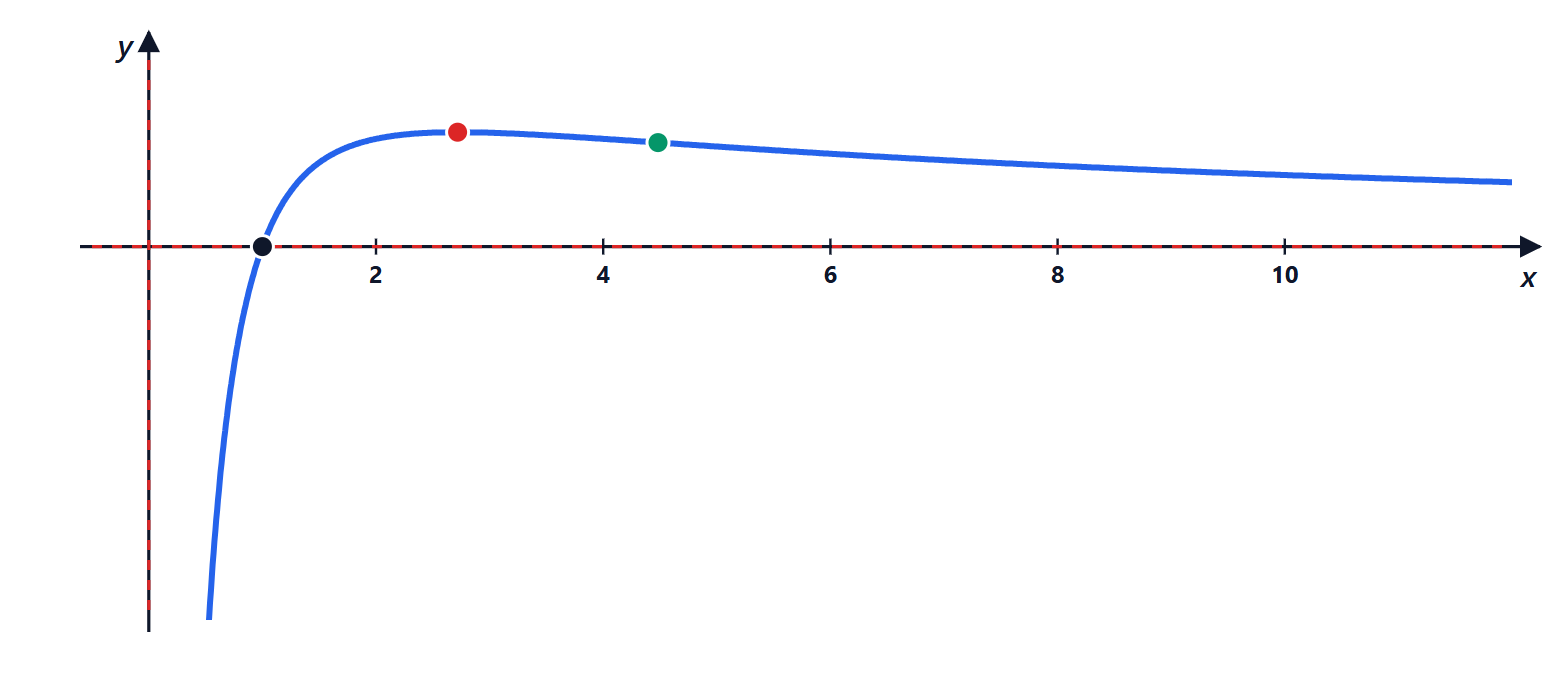
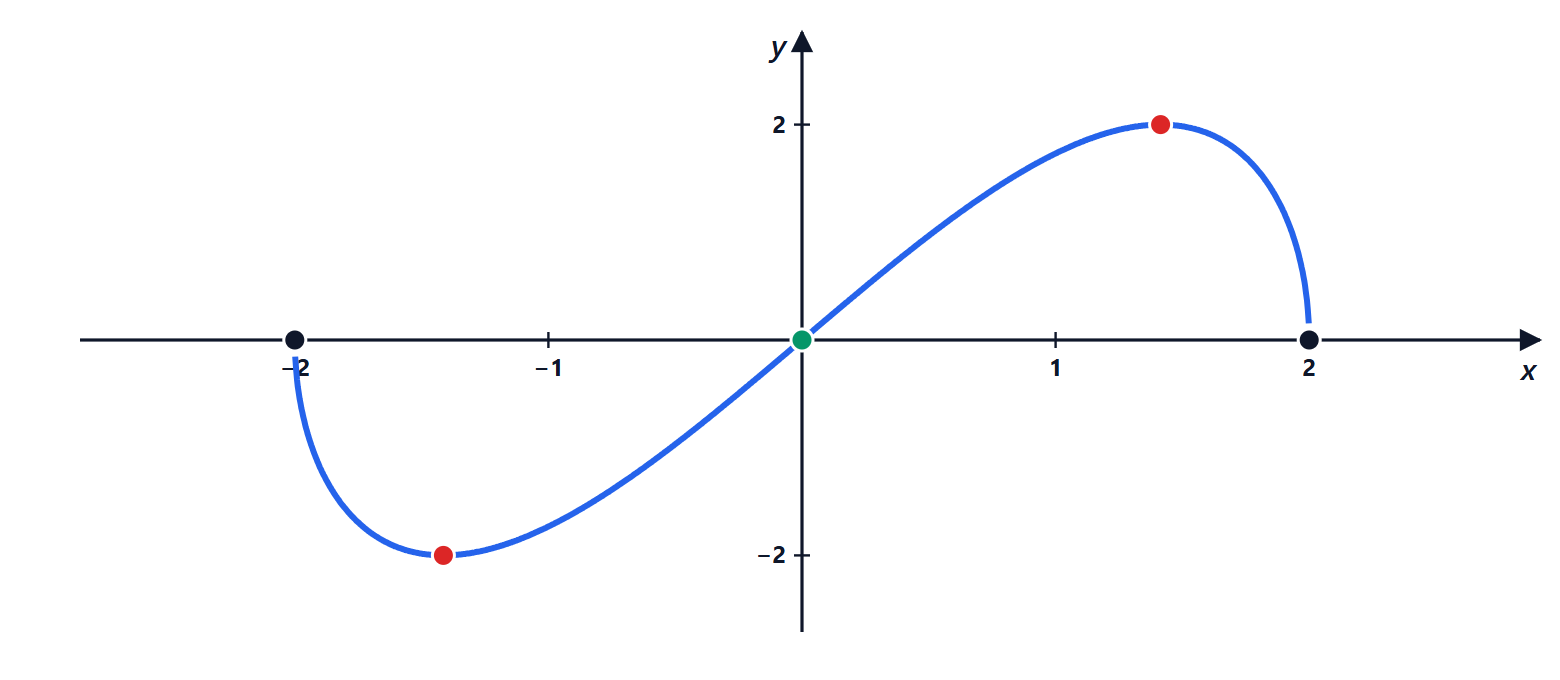
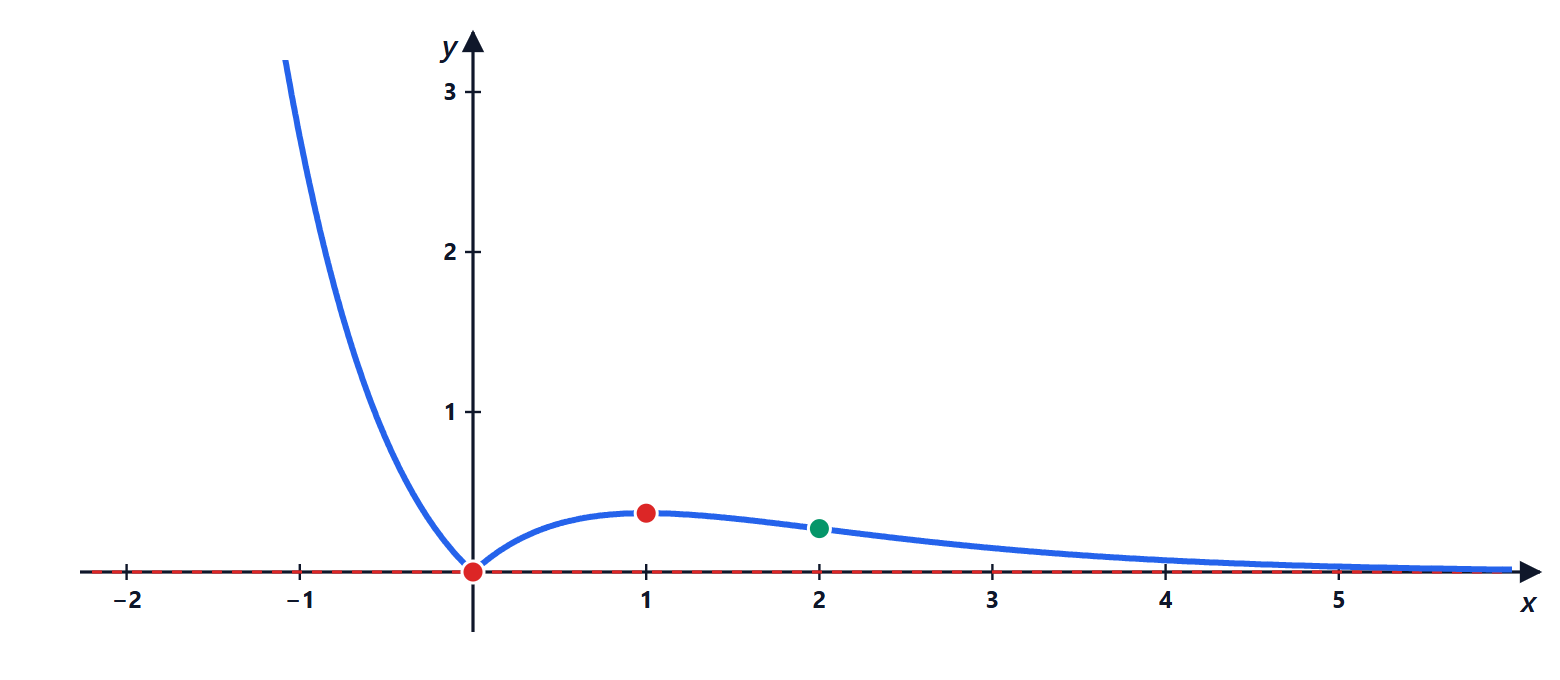
In the graphs the red dots are maxima and minima, the green ones inflection points, the black ones intersections with the axes; asymptotes are dashed in red.
Basic level
Exercise 1. A cubic polynomial
Study  and sketch its graph.
Result: odd; local maximum  , local minimum
 , inflection point
 ; no asymptotes.
Solution
1. Domain and symmetry.  .
 : the function is odd, the graph is symmetric about the origin.
2. Zeros and sign.  for
 and
 .
 for
 and for
 .
3. Limits and asymptotes.  as
 . No asymptotes:
 .
4. First derivative.  : positive for
 , negative for
 . Increasing on
 and
 , decreasing on
 . Local maximum
 , local minimum
 .
5. Second derivative.  : concave for
 , convex for
 . Inflection point at the origin, with tangent of slope
 .
6. Graph. The maximum and minimum are only local, because the function is unbounded.

Exercise 2. A rational function with a horizontal asymptote
Study 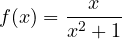 .
Result: odd; asymptote  ; absolute minimum
 , absolute maximum
 ; inflection points at and
 .
Solution
1. Domain and symmetry. The denominator never vanishes: domain . Odd.
2. Zeros and sign. Zero at ; sign of  .
3. Limits and asymptotes. Numerator degree lower than denominator degree:  as , horizontal asymptote .
4. First derivative.  . Positive for . Decreasing on , increasing on , decreasing on . Minimum
 , maximum
 . They are absolute: the function tends to 0 at the ends and never exceeds these values.
5. Second derivative. 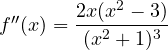 . The sign is that of
 : negative for
 , positive between
 and 0, negative between 0 and
 , positive beyond. Three inflection points: and
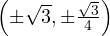 .
6. Graph. The graph crosses the asymptote at the origin: a horizontal asymptote only describes the behaviour at infinity.

Exercise 3. The Gaussian
Study 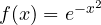 .
Result: even, always positive; asymptote ; absolute maximum  ; inflection points at
 .
Solution
1. Domain and symmetry. ; even.
2. Sign. An exponential is always positive: no zeros.
3. Limits.  , so : asymptote on both sides.
4. First derivative.  : increasing for , decreasing for . Absolute maximum
 .
5. Second derivative.  : negative for
 , positive outside. Inflection points at
 , where
 .
6. Graph. It is the bell curve of the normal distribution (up to constants): the inflection points lie one “standard deviation” from the centre, here  .

Intermediate level
Exercise 4. Vertical and oblique asymptotes
Study 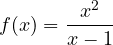 .
Result: asymptotes  and
 ; local maximum , local minimum
 ; concave for
 , convex for
 , no inflection point.
Solution
1. Domain.  . No symmetry (the domain is not symmetric).
2. Zeros and sign. Double zero at . The numerator is  : the sign is that of
 , negative to the left of 1 and positive to the right.
3. Limits and asymptotes.  : , vertical asymptote . Division:
 , so
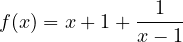 : oblique asymptote , with the graph above it for and below for .
4. First derivative.  . Positive for and for
 . Increasing on
 , decreasing on and on
 , increasing on
 . Local maximum
 , local minimum
 .
The maximum is less than the minimum: this is not a contradiction, because they lie on two branches separated by the vertical asymptote.
5. Second derivative. From the form  :
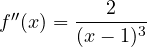 . Concave for , convex for . No inflection point: the change of concavity happens at , which does not belong to the domain.
Exercise 5. Logarithm over x
Study  and use the result to decide which number is larger between
 and
 .
Result: asymptotes and ; absolute maximum  ; inflection point at
 ;
 .
Solution
1. Domain. .
2. Zeros and sign. Zero at ; positive for .
3. Limits.  :
 and
 , the product
 : vertical asymptote .
 :
 (hierarchy of infinities), horizontal asymptote .
4. First derivative.  : positive for
 . Absolute maximum
 .
5. Second derivative.  : inflection point at
 ,
 ; concave before, convex after.
6. Application. Since the maximum is at  , for
 we have
 . Multiplying by
 :
 , i.e.
 , hence
 (about 22.46 against 23.14). Curve sketching also serves to prove inequalities.
Exercise 6. A root with vertical tangents
Study  .
Result: domain  , odd; absolute maximum
 , absolute minimum
 ; inflection point ; vertical tangents at
 .
Solution
1. Domain and symmetry.  , i.e.
 . Odd.
2. Zeros and sign. Zeros at 0 and  ; sign of .
3. Limits and asymptotes. The domain is a closed interval and  is continuous: no asymptotes, and by the extreme value theorem it has an absolute maximum and minimum.
4. First derivative. For  :

It vanishes at  . Increasing on
 , decreasing on
 and on
 . Maximum
 , minimum
 .
At the endpoints:  . By the limit-of-the-derivative theorem, at
 the tangent is vertical; the same at .
5. Second derivative. 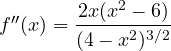 . In the domain
 , so the sign is opposite to that of : convex for , concave for . Inflection point at the origin, with slope
 .
Exercise 7. An absolute value and a corner point
Study  .
Result: absolute minimum at a corner point; local maximum  ; inflection point
 ; asymptote as .
Solution
1. Domain. . Split the absolute value:  for
 ,
 for .
2. Sign.  , zero only at 0: the origin is therefore the absolute minimum, whatever the derivative says.
3. Limits. :  , asymptote .
 :
 , and
 : no oblique asymptote.
4. First derivative. For :  . For :
 . So decreases on , increases on , decreases on : local maximum
 .
At 0:  ,
 . Finite and different one-sided derivatives: corner point.
5. Second derivative. For :  , inflection point at ,
 . For :
 , convex.
Exam level
Exercise 8. An asymptote on one side only
Study 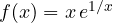 .
Result: vertical asymptote from the right only; oblique asymptote ; local minimum  ; as
 the graph reaches the origin with a horizontal tangent; no inflection point.
Solution
1. Domain.  .
2. Sign. Sign of ; no zeros.
3. Limits. : with  ,
 : vertical asymptote from the right. :
 ,
 , and : from the left no asymptote, the graph approaches the origin.
Oblique:  ;
 (with
 ,
 ). Asymptote on both sides. With Taylor,
 : graph above the asymptote as , below as .
4. First derivative.  . The sign is that of
 : positive for and for . Local minimum
 .
As :  ; with
 ,
 . The graph reaches the origin with a horizontal tangent.
5. Second derivative. 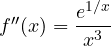 : concave for , convex for . No inflection point (0 is excluded).

Exercise 9. A logarithm with a split domain
Study  .
Result: domain or , symmetric about the line  ; vertical asymptotes and ; decreasing for , increasing for ; concave everywhere; zeros
 .
Solution
1. Domain.  : or .
Symmetry. Substituting  for :
 . So
 : the graph is symmetric about the line , the axis of the parabola inside the logarithm.
2. Zeros and sign.  if
 , i.e.
 and
 . if the argument exceeds 1:
 or
 .
3. Limits.  and
 : the argument
 ,
 : vertical asymptotes. :
 , but
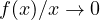 (the logarithm grows more slowly than ): no oblique asymptote.
4. First derivative.  . In the domain the denominator is positive: the sign is that of
 . For it is negative (decreasing), for positive (increasing). The zero
 does not belong to the domain: no extrema.
5. Second derivative.  . The trinomial
 has discriminant
 and is always positive:
 , concave on both intervals.

Exercise 10. A cusp
Study  .
Result: cusp with local maximum at ; local minimum  ; inflection point
 ; no asymptotes.
Solution
1. Domain. : the cube root is defined everywhere. Write  .
2. Zeros and sign. Zeros at 0 and 5.  , so the sign is that of
 : negative for
 (except at 0), positive after.
3. Limits.  at the ends;
 : no asymptotes.
4. First derivative. For :

Sign of  : positive for (numerator and denominator negative) and for ; negative between 0 and 2. Local minimum
 .
At 0:  and
 . Infinite derivatives with opposite signs: cusp, which is also a local maximum (the function increases before and decreases after).
5. Second derivative. 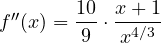 . The denominator
 is positive: concave for
 , convex for
 (). Inflection point at .

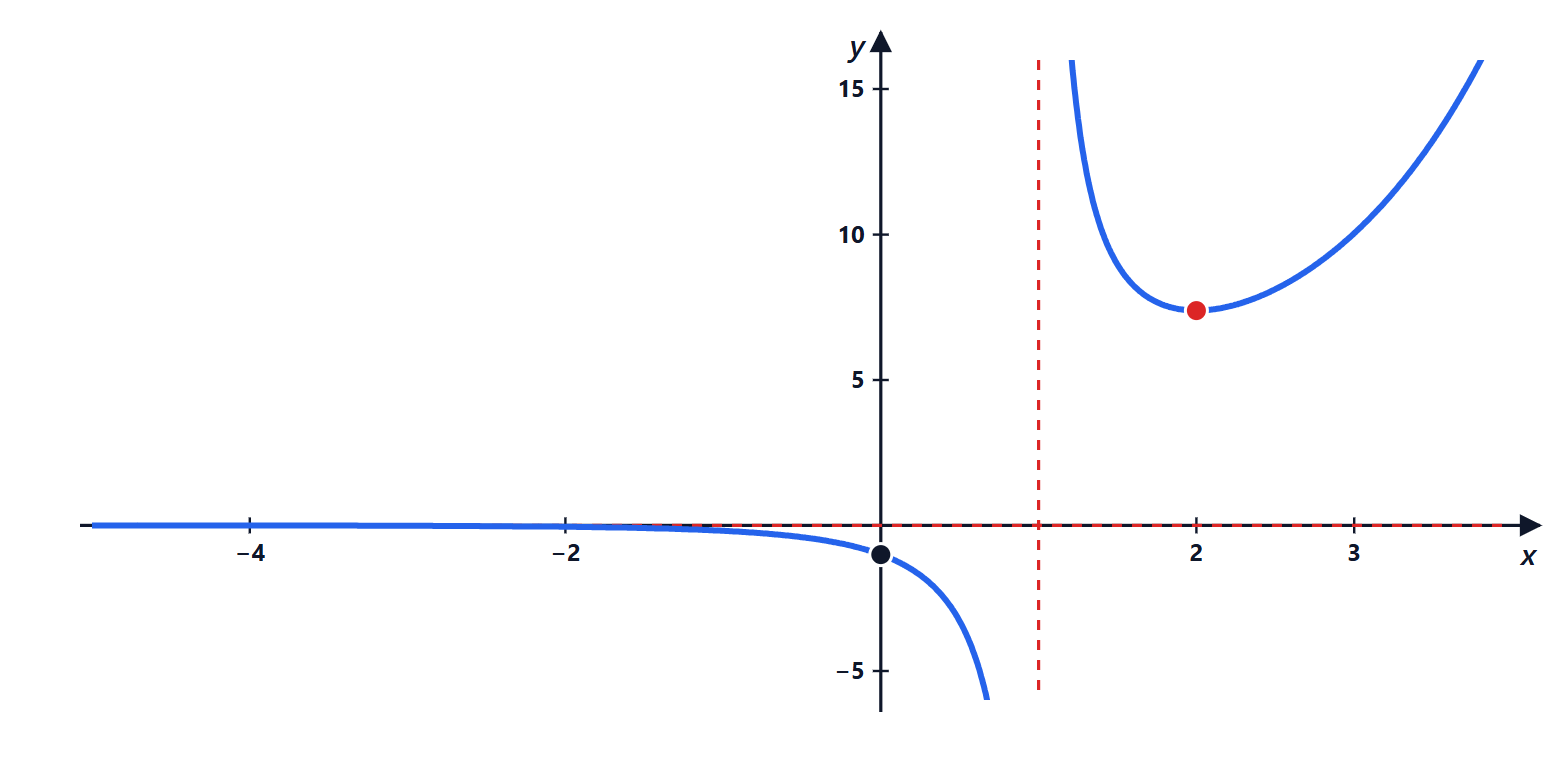
Exercise 11. Exponential over linear
Study 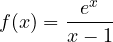 .
Result: asymptotes and (as ); local minimum  ; concave for , convex for ; no inflection point.
Solution
1. Domain. .
2. Zeros and sign. No zeros; sign of . It meets the  axis at
 .
3. Limits. : . :  and the denominator ,
 : asymptote on the left. : and
 : no oblique asymptote.
4. First derivative.  : negative for
 (), positive after. Local minimum
 .
5. Second derivative. 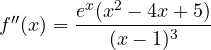 .
 has negative discriminant, so it is always positive: the sign is that of . Concave to the left of 1, convex to the right, no inflection point.
Exercise 12. How many solutions an equation has
As the real parameter  varies, how many solutions does the equation
 have?
Result: none for  ; one for
 ; two for
 ; one for
 .
Solution
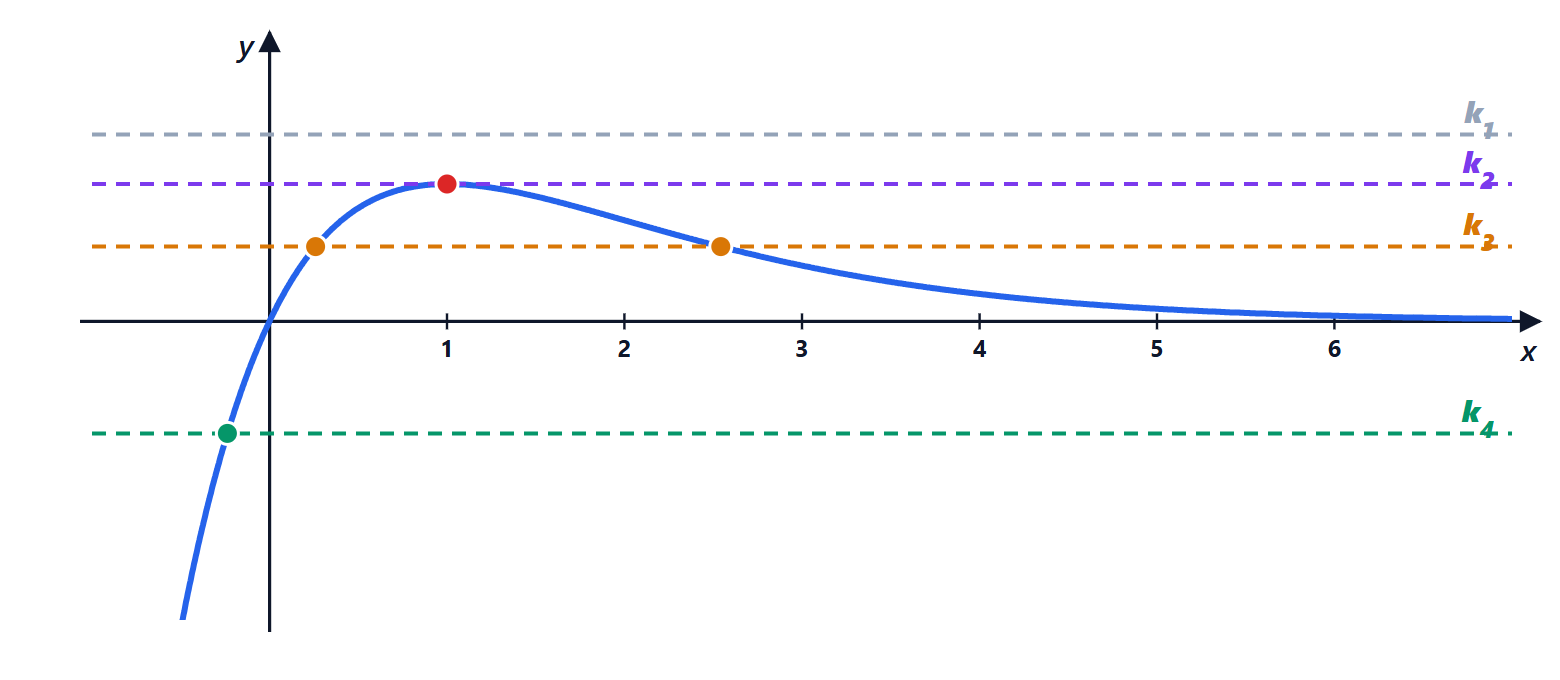
The solutions are the abscissas of the intersections between the graph of and the horizontal line  . The graph is the one studied in the lesson:
- as ,
 as ;
- increasing on
 , decreasing on , absolute maximum
 ;
 for , for .
Move the line from top to bottom:
1. : the line lies above the maximum, no solutions.
2. : the line is tangent at the maximum, one solution, .
3. : two solutions, one in on the increasing branch and one in on the decreasing branch (which never reaches 0). For  they are about 0.259 and 2.543.
4. : the positive part of the graph no longer matters; the branch  is increasing and goes from
 to 0, so there is one solution, . For
 it is about
 .
The existence of the solutions follows from the intermediate value theorem (continuous function), uniqueness on each branch from monotonicity.