Maxwell's equations and electromagnetic waves
The displacement current, the four equations in integral and local form, the wave equation and the speed of light, the Poynting vector and the electromagnetic spectrum.
In 1865 Maxwell gathered all of electromagnetism into four equations, added a missing term and found that they predicted waves travelling at the speed of light. Light was an electromagnetic wave. Twenty years later Hertz produced and detected radio waves in the laboratory; from there came radio, television, radar, Wi-Fi and mobile phones. This lesson closes the Physics 2 course.
The displacement current
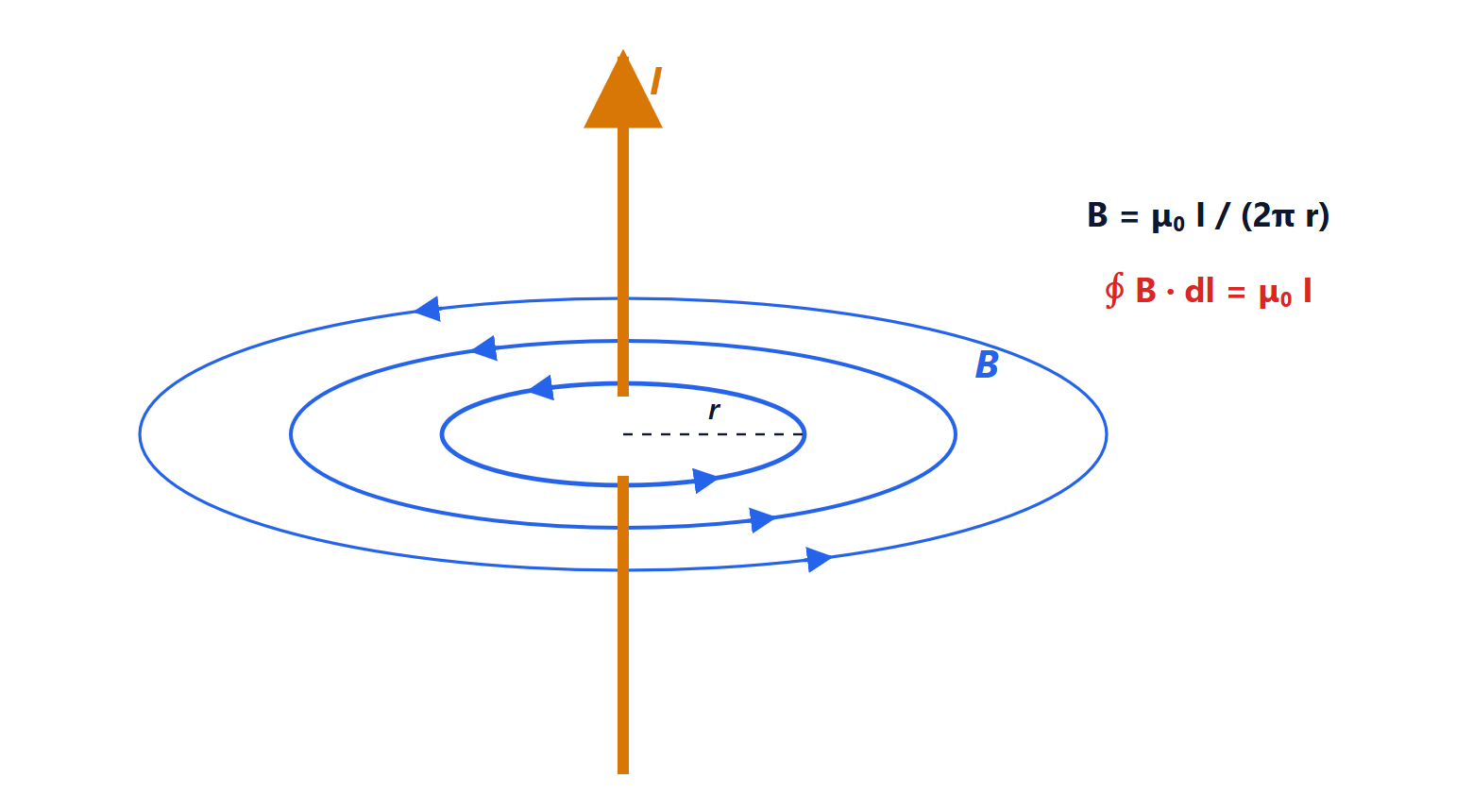
Ampère’s law, 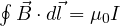 , has a problem. Think of a capacitor that is charging. A closed line around the wire is the boundary both of a surface crossed by the wire (with current
 ) and of a “bag” surface passing between the plates (where no current flows). The two choices give different results, yet Stokes’ theorem says the answer cannot depend on the surface.
Between the plates, however, there is a growing electric field. Maxwell added to the conduction current the displacement current
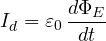
For the parallel-plate capacitor,  , so
 : exactly the current in the wire. The corrected Ampère law holds for any surface. Its physical meaning is profound: a changing electric field generates a magnetic field, just as a changing magnetic field generates an electric field (Faraday).
Maxwell’s equations
| Law | Integral form | Local form | Meaning |
|---|---|---|---|
| Gauss |  | 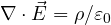 | charges are sources of the electric field |
| Gauss for magnetism | 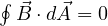 |  | there are no magnetic charges: B lines are closed |
| Faraday | 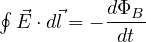 | 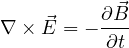 | a changing B generates E |
| Ampère-Maxwell |  | 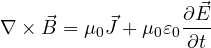 | currents and a changing E generate B |
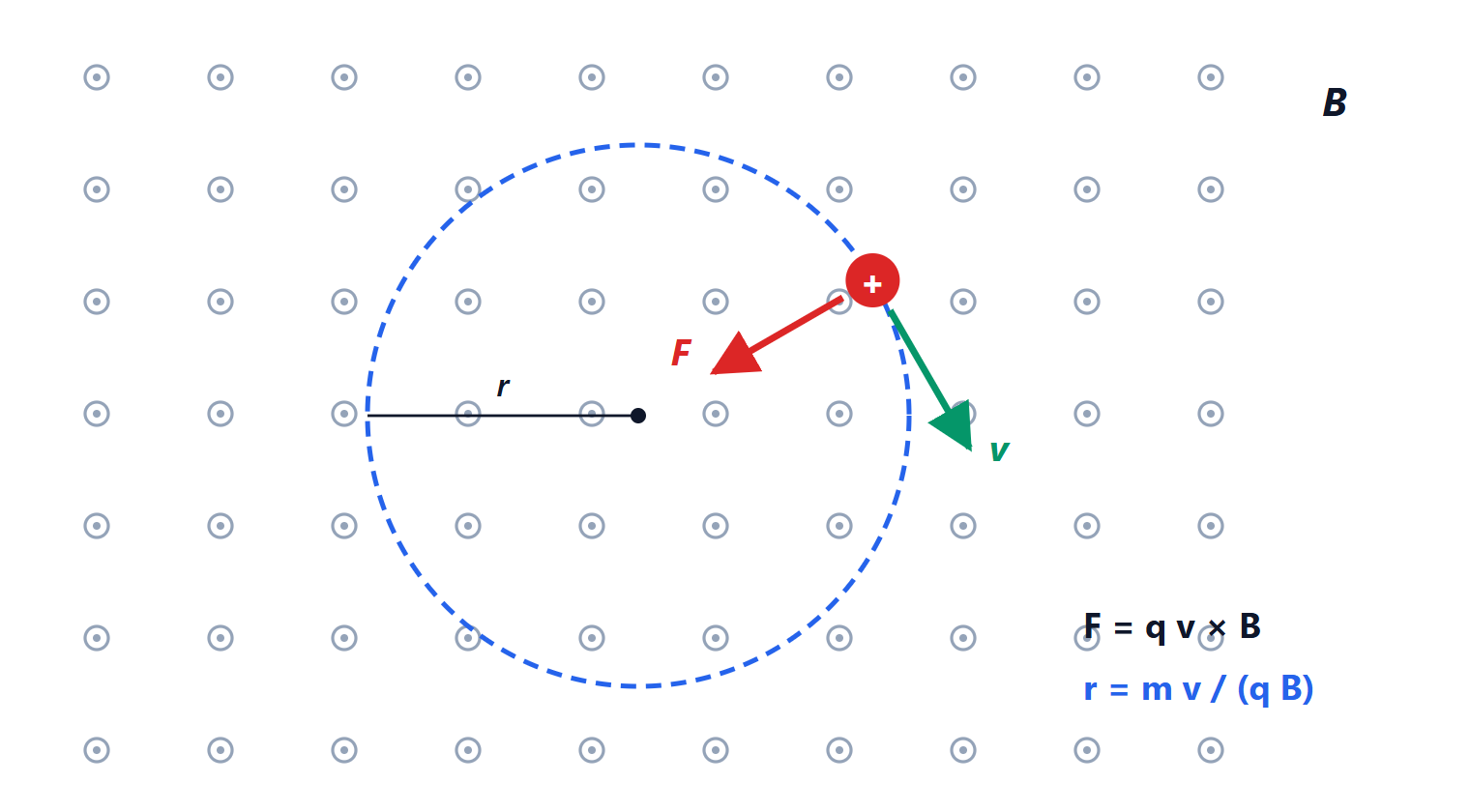
The step from integral to local form uses the divergence and Stokes theorems of Analysis 2. Together with the Lorentz force,  , these equations describe every classical electromagnetic phenomenon: from circuits to antennas, from motors to optical fibres.
Electromagnetic waves
In vacuum, with no charges or currents, the equations become symmetric: a changing  creates
 , a changing creates . Combining the two curl laws gives, for each component,
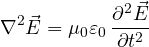
It is the wave equation, with propagation speed

Maxwell computed this number from constants measured with capacitors and coils, and found the speed of light measured by astronomers. It was the proof that light is an electromagnetic wave.
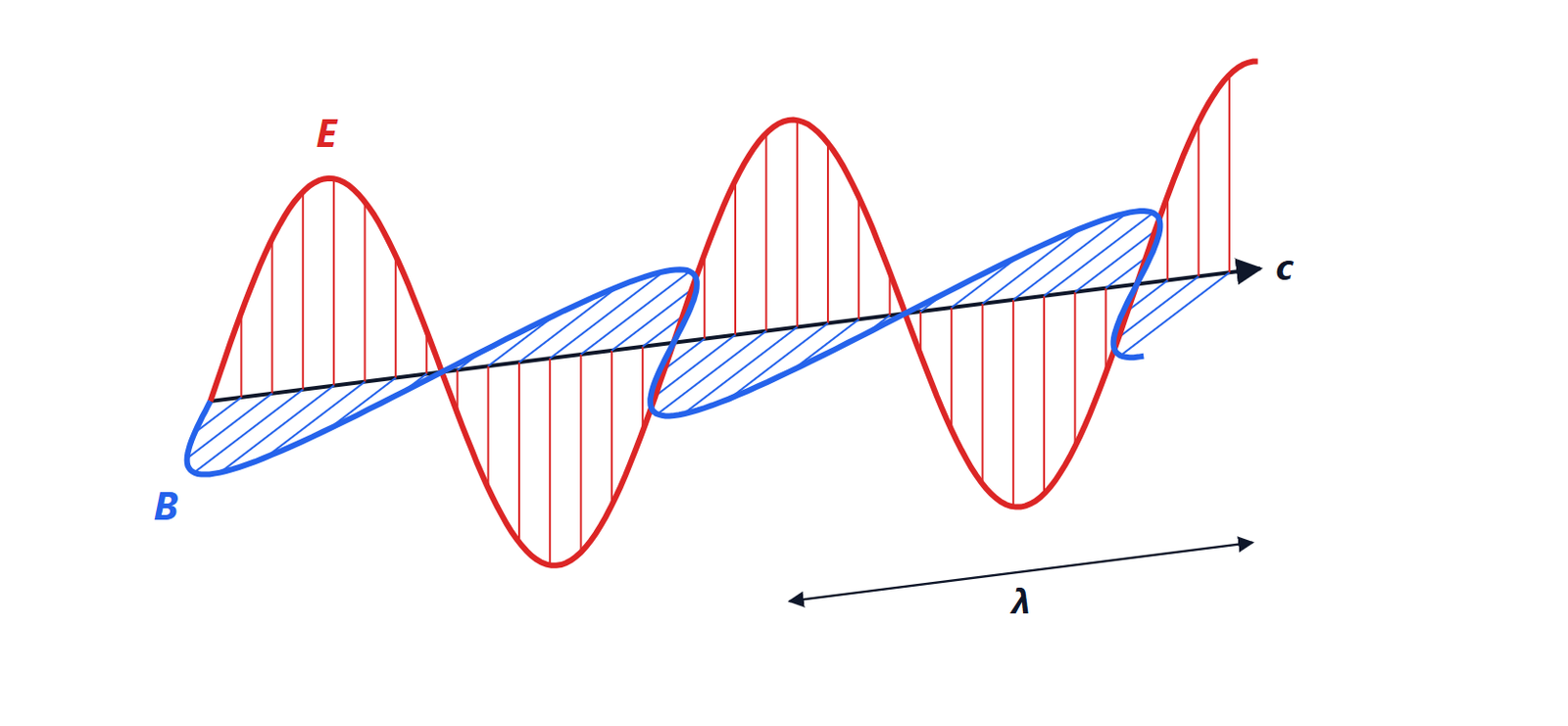
Properties of a plane wave:
- and are perpendicular to each other and to the direction of travel (transverse wave), and
 points in the direction of travel;
- their magnitudes are linked by
 ;
- wavelength and frequency are linked by
 ;
- the direction in which oscillates is the polarisation.
Energy and the Poynting vector
The wave carries energy. The energy density is the sum of the electric and magnetic parts, 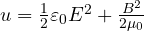 , which are equal for a wave. The energy flow per unit area and time is the Poynting vector
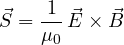
and its average is the intensity (W/m²). Sunlight reaches the Earth with about 1360 W/m² above the atmosphere. The wave also carries momentum: radiation pressure, tiny on Earth, pushes solar sails in space.
Example. An antenna radiating 1 W evenly in all directions produces at 1 km an intensity  W/m², and an RMS field
 mV/m. Enough for a good receiver.
The electromagnetic spectrum
| Band | Wavelength | Examples |
|---|---|---|
| radio waves | km to cm | AM and FM radio, TV, mobile phones, Wi-Fi at 2.4 and 5 GHz (12 and 6 cm) |
| microwaves | cm to mm | radar, microwave ovens, 77 GHz automotive radar |
| infrared | 1 mm to 780 nm | remote controls, thermal cameras, optical fibres at 1550 nm |
| visible | 780 to 380 nm | light, LEDs |
| ultraviolet | 380 to 10 nm | sterilisation, chip photolithography |
| X-rays and gamma rays | below 10 nm | X-ray imaging, astrophysics |
They are all the same thing, at different frequencies. Antenna size is tied to wavelength: a dipole antenna is about  long, that is 6 cm for 2.4 GHz Wi-Fi. That is why phones have built-in antennas a few centimetres long, while medium-wave radios had antennas tens of metres long.
The consequences
Maxwell’s equations also held a puzzle: the speed  does not depend on the motion of whoever measures it, in conflict with the Galilean transformation of Physics 1. Einstein solved it in 1905 with special relativity, linked as an in-depth page to this subject.