Complex numbers: algebraic, trigonometric and exponential form
Operations, the complex plane, modulus and argument, Euler's formula, powers with De Moivre, n-th roots, equations and why circuit phasors are complex numbers.
The equation  has no real solutions. Complex numbers were introduced to give it some, but for an electronics student they are much more than that: they are the natural way to describe sinusoids, impedances and spectra. This lesson covers everything a first calculus course needs: algebraic form, the complex plane, trigonometric and exponential form, powers, roots and equations.
Algebraic form
We introduce the imaginary unit  , with
 (in circuit theory it is written
 , because is the current). A complex number is
 , with real part
 and imaginary part
 . Operations follow the usual rules of algebra, remembering that :
- sum:
 ;
- product:
 ;
- conjugate:
 , with
 ;
- quotient: multiply numerator and denominator by the conjugate of the denominator,
 .
The complex plane, modulus and argument
The number  is represented as the point
 of the plane. Its distance from the origin is the modulus
 , and its angle with the positive real axis is the argument
 . To find the argument,
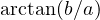 is not enough: you must look at the quadrant. For
 ,
 , but the point is in the second quadrant, so
 .
Trigonometric and exponential form
With modulus  and argument
 we write
 . Euler’s formula

gives the compact form  . The advantage is huge for products: moduli multiply and arguments add,

Multiplying by  therefore means rotating by 90° in the plane: that is why an inductor shifts the current by a quarter of a period.
Powers: De Moivre’s formula
From the above,  , that is
 . Example:
 . The modulus is
 and the argument
 , so
 . Multiplying it out by hand would take much longer.
n-th roots
Every non-zero complex number  has exactly
 distinct -th roots:

They lie at the vertices of a regular polygon with sides centred at the origin. The cube roots of 1, for example, are  ,
 ,
 : an equilateral triangle, the same pattern as the three phases of a three-phase system.
Equations
In the complex numbers every quadratic equation has two solutions, even with a negative discriminant:  gives
 . More generally, the fundamental theorem of algebra says that a polynomial of degree has exactly complex roots, counted with multiplicity. If the coefficients are real, the non-real roots come in conjugate pairs.
A common mistake: the rules for real powers do not always hold. Writing  leads to
 , which is false. In the complex numbers the root is a multi-valued function and must be handled with the root formula.
Why engineers need them
A sinusoidal voltage  is the real part of
 . The complex number
 , called a phasor, carries amplitude and phase. With phasors, derivatives become multiplications by
 , and the differential equations of circuits in sinusoidal steady state become algebraic equations: a resistor has impedance
 , an inductor
 , a capacitor
 . The same language returns in the Fourier transform and in the frequency response of filters.